ABOUT LUPUS
What is systemic lupus erythematosus, or lupus?
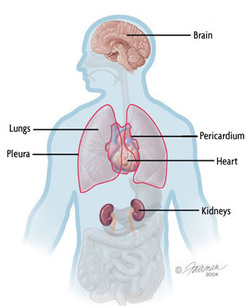
Lupus is an autoimmune disease, which means that the body's natural defense system (immune system) which is designed to attacks foreign substances in the body like bacteria and viruses, with Lupus it attacks its own healthy cells and tissues. This causes inflammation. Inflammation causes swelling, pain, and tissue damage throughout the body. If you develop severe lupus, you may have problems with your kidneys, heart, lungs, nervous system, joints, skin, brain or blood cells. Lupus is the common name for systemic lupus erythematosus, also called SLE.
Although some people with lupus have only mild symptoms, the disease is lifelong and can become severe. But most people can control their symptoms and prevent severe damage to their organs. They do this by seeing their doctors often for checkups, getting enough rest and exercise, and taking medicines.
This topic focuses on systemic lupus erythematosus (SLE), the most common and most serious type of lupus. But there are four other types of lupus: discoid or cutaneous lupus, drug-induced systemic lupus, neonatal lupus, and subacute cutaneous lupus.
Who Gets Lupus?
Anyone can get lupus, but it most often affects women. Lupus is also more common in women of African American, Hispanic, Asian, and Native American descent than in Caucasian women.
What causes lupus?
The exact cause of lupus is not known. Experts believe that some people are born with certain genes that affect how the immune system works and that they are more likely to get lupus. Then a number of other factors can trigger lupus attacks. These include viral infections, including the virus that causes mononucleosis, and sunlight.
Although these things can trigger lupus, they may affect one person but not another person.
What are the symptoms?
Lupus symptoms vary widely, and they come and go. The times when symptoms get worse are called relapses, or flares. The times when symptoms are under control are called remissions.
Anemia (a decrease in red blood cells)
Lupus is an autoimmune disease, which means that the body's natural defense system (immune system) which is designed to attacks foreign substances in the body like bacteria and viruses, with Lupus it attacks its own healthy cells and tissues. This causes inflammation. Inflammation causes swelling, pain, and tissue damage throughout the body. If you develop severe lupus, you may have problems with your kidneys, heart, lungs, nervous system, joints, skin, brain or blood cells. Lupus is the common name for systemic lupus erythematosus, also called SLE.
Although some people with lupus have only mild symptoms, the disease is lifelong and can become severe. But most people can control their symptoms and prevent severe damage to their organs. They do this by seeing their doctors often for checkups, getting enough rest and exercise, and taking medicines.
This topic focuses on systemic lupus erythematosus (SLE), the most common and most serious type of lupus. But there are four other types of lupus: discoid or cutaneous lupus, drug-induced systemic lupus, neonatal lupus, and subacute cutaneous lupus.
Who Gets Lupus?
Anyone can get lupus, but it most often affects women. Lupus is also more common in women of African American, Hispanic, Asian, and Native American descent than in Caucasian women.
What causes lupus?
The exact cause of lupus is not known. Experts believe that some people are born with certain genes that affect how the immune system works and that they are more likely to get lupus. Then a number of other factors can trigger lupus attacks. These include viral infections, including the virus that causes mononucleosis, and sunlight.
Although these things can trigger lupus, they may affect one person but not another person.
What are the symptoms?
Lupus symptoms vary widely, and they come and go. The times when symptoms get worse are called relapses, or flares. The times when symptoms are under control are called remissions.
- Common symptoms include:
- Pain or swelling in joints
- Muscle pain
- Fever with no known cause
- Red rashes, most often on the face (sometimes called the “butterfly rash”)
- Chest pain when taking a deep breath
- Hair loss
- Pale or purple fingers or toes
- Sensitivity to the sun
- Swelling in legs or around eyes
- Mouth ulcers
- Swollen glands
- Feeling very tired.
Anemia (a decrease in red blood cells)
- Headaches
- Dizzy spells
- Feeling sad
- Confusion
- Seizures.
How is lupus diagnosed?
There is no single test for lupus. Because lupus affects different people in different ways, it can be hard to diagnose. It may take months or years for a doctor to diagnose lupus. Your doctor may use many tools to make a diagnosis:
How is Lupus treated? You may need special kinds of doctors to treat the many symptoms of lupus. Your health care team may include:
Alternative treatments are those that are not part of standard treatment. No research shows that this kind of treatment works for people with lupus. You should talk to your doctor about alternative treatments. Lupus is treated by:
There is no single test for lupus. Because lupus affects different people in different ways, it can be hard to diagnose. It may take months or years for a doctor to diagnose lupus. Your doctor may use many tools to make a diagnosis:
- Medical history
- Complete exam
- Blood tests
- Skin biopsy (looking at skin samples under a microscope)
- Kidney biopsy (looking at tissue from your kidney under a microscope).
How is Lupus treated? You may need special kinds of doctors to treat the many symptoms of lupus. Your health care team may include:
- A family doctor
- Rheumatologists – doctors who treat arthritis and other diseases that cause swelling in the joints
- Clinical immunologists – doctors who treat immune system disorders
- Nephrologists – doctors who treat kidney disease
- Hematologists – doctors who treat blood disorders
- Dermatologists – doctors who treat skin diseases
- Neurologists – doctors who treat problems with the nervous system
- Nurses
- Psychologists
- Social workers
- Prevent flares
- Treat flares when they occur
-
Reduce organ damage and other problems.
- Reduce swelling and pain
- Prevent or reduce flares
- Calm the immune system
- Reduce or prevent damage to joints.
Alternative treatments are those that are not part of standard treatment. No research shows that this kind of treatment works for people with lupus. You should talk to your doctor about alternative treatments. Lupus is treated by:
- Applying corticosteroid cream for rashes.
- Taking nonsteroidal anti-inflammatory drugs (NSAIDs) for mild joint or muscle pain and fever.
- Taking antimalarial medicines to treat fatigue, joint pain, and skin rashes.
- Taking corticosteroids if other medicines are not controlling your symptoms.
THE PURPLE BUTTERFLY, INC. raises funds, including soliciting or obtaining contributions from the general public, necessary to finance programs and projects and to operate programs or projects, in its own behalf or on behalf of others whose programs or projects promote the purposes for which the Corporation is organized.